
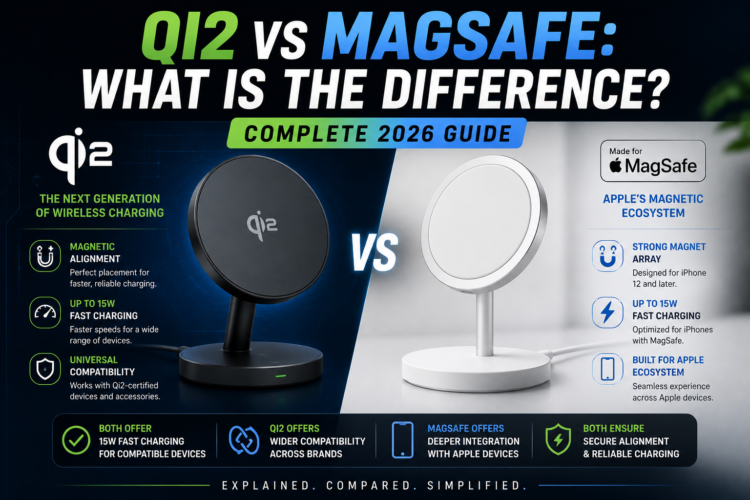
In 2022, Apple introduced MagSafe for iPhone a magnetic charging system that snaps to the back of your phone for perfectly aligned, fast wireless charging. In 2023, the Wireless Power Consortium (WPC) announced Qi2, a new open standard heavily based on Apple’s MagSafe technology.
The result? Something that looks a lot like MagSafe but works with any compatible phone. This guide from WirelessGearGuide.com explains exactly what’s the same, what’s different, and what it means for your charging setup.
The Origins of Qi2
Apple was heavily involved in developing the Qi2 standard to the point where Qi2 is often described as ‘MagSafe for everyone.’ Apple contributed its Magnetic Power Profile (MPP) technology to the WPC, which formed the core of what became Qi2. This means Qi2 uses the same magnetic ring design, the same magnet alignment approach, and delivers the same 15W charging speed as Apple MagSafe.
Qi2 vs MagSafe: Key Differences
| Feature | MagSafe (Apple) | Qi2 (Open Standard) |
| Developer | Apple Inc. | Wireless Power Consortium |
| Max Charging Speed | 15W (iPhone 12+) | 15W (expandable to higher in future) |
| Magnetic Alignment | Yes | Yes (same magnet ring) |
| iPhone Compatibility | iPhone 12 and later | iPhone 13 and later (with iOS 17+) |
| Android Compatibility | No | Yes (2024+ devices) |
| Third-Party Chargers | Limited (Apple licensing) | Open — any manufacturer |
| MFi Certification Needed | Yes for full 15W | No |
| Price of Chargers | $39–$149 (Apple/licensed) | $20–$99 (many options) |
Does Qi2 Work With iPhones?
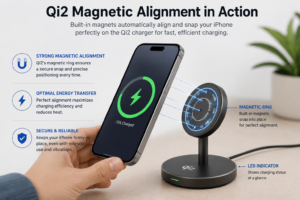
Yes. iPhone 13 and newer models running iOS 17 or later are fully Qi2 compatible. Apple quietly added Qi2 support via a software update, which means you can use any certified Qi2 charger and get the same 15W MagSafe-level charging without paying for an Apple-branded charger or a licensed MFi product.
iPhone 12 models are not Qi2 compatible due to hardware limitations in the magnetic ring design. They will still charge via regular Qi2 pads, but only at 7.5W (standard iPhone wireless charging speed) rather than the full 15W.
Which Android Phones Support Qi2?
Qi2 adoption on Android started slowly in 2023 but expanded significantly in 2024. Here are the major Android phones with Qi2 support as of 2026:
- Samsung Galaxy S25 series (all models)
- Google Pixel 9 and 9 Pro series
- OnePlus 13 and 13R
- Motorola Edge+ (2024)
- Xiaomi 14 Ultra
For Android phones without native Qi2 magnets, you can add Qi2 compatibility by attaching a thin magnetic ring adhesive to the back of your phone. This won’t give you perfect alignment or the full 15W speed, but it works with most Qi2 chargers.
The Future of Wireless Charging: Qi2.2 and Beyond
The Wireless Power Consortium has already announced Qi2.2, which extends the maximum charging speed to 30W and adds support for larger devices like tablets and laptops. Qi2.2 devices and chargers are expected to appear in late 2026. All Qi2.2 chargers will remain backward compatible with Qi2 and Qi devices.
Our Recommendation
If you have an iPhone 13 or newer, invest in a Qi2-certified charger rather than an official Apple MagSafe charger. You’ll get the same 15W speed at half the price with more options from brands like Anker, Belkin, and ESR.
If you’re on Android, check your phone’s spec sheet for Qi2 support. If your phone was released in 2024 or later, it almost certainly supports Qi2. If not, standard Qi charging still works — you just won’t get the magnetic alignment and the charging speed depends on your phone’s Qi support level.


No Comments
Leave Comment